
How to Calculate Food Cost — The Food Cost Formula with a Real Example
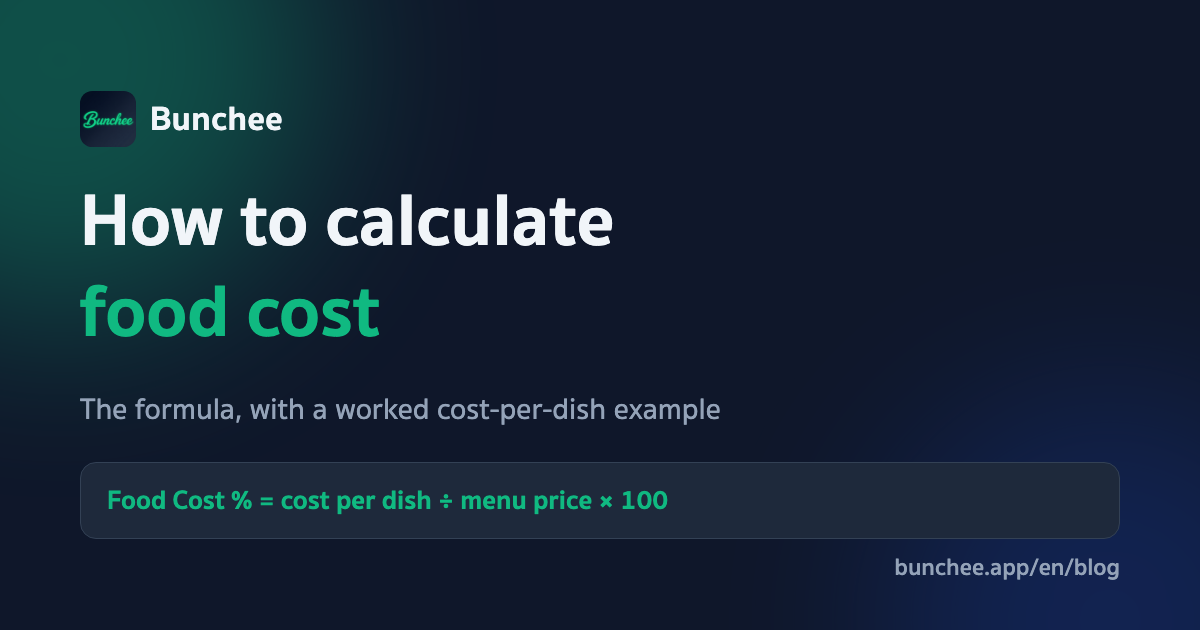
The shop is busy, yet there's no money left at the end of the month. Almost every time, the root cause is the same: you don't know the true food cost of each plate. This article walks you through calculating food cost step by step, in a way any owner can follow — no accounting background needed.
What is food cost?
Food cost is the total cost of the ingredients that go into one plate, expressed as a percentage of the selling price. The lower the percentage, the higher your gross profit per plate — but go too low and customers may feel the dish isn't worth the money. Finding the balance is what matters.
Example: costing a plate of pad kaprao with minced pork and a fried egg
The right way is to break the dish down into every single ingredient, then cost each one by the amount you actually use per plate:
| Ingredient | Amount per plate | Purchase price | Cost per plate |
|---|---|---|---|
| Minced pork | 80 g | ฿140/kg | ฿11.20 |
| Steamed rice | 200 g | ฿35/kg (uncooked rice, ~55% yield as cooked rice) | ฿2.50 |
| Egg | 1 egg | ฿4.50 each | ฿4.50 |
| Holy basil + chilli + garlic | 20 g | Average | ฿1.50 |
| Oil + seasoning (fish sauce, sauces, sugar) | — | Average per plate | ฿2.00 |
| Gas (average per stir-fried plate) | — | — | ฿1.00 |
| Total cost per plate | ฿22.70 |
If you sell it for ฿65 a plate:
That sits right inside the range for a made-to-order shop (30–35%). But notice: if you forgot the gas and seasoning, the number drops to 30.3% — 4–5 points better than reality. Multiply that across a whole month of sales and it's thousands, even tens of thousands, of baht in profit you thought you had but didn't.
What should your food cost be?
| Type of shop | Target food cost |
|---|---|
| Made-to-order (ahan tam sang) / street food | 30–35% |
| Noodle shop | 35–40% |
| Buffet / moo kratha | 40–45% |
| Coffee shop / drinks | 20–25% |
| Bakery | 25–35% |
These numbers are guidelines, not hard rules — a shop with cheap rent might accept a higher food cost so it can serve bigger plates than the competition. The key is knowing your own shop's numbers first, then making the call.
Don't forget yield — not everything you buy ends up on the plate
Say you buy 1 kg of Chinese kale (kana) for ฿40. After picking off the yellow leaves and cutting away the tough stems, you're left with 800 g you can actually use. That's a yield of 80%, and the real cost of the kale that reaches the plate is:
Ingredients with especially low yield: fish (~50% after filleting), prawns (~60–70% after peeling), leafy greens (70–85%). If you cost straight from the purchase price without dividing by yield, your cost per plate will always come out lower than it really is.
Hidden costs most shops forget
- Seasoning and oil — a few satang per plate looks like nothing, but it adds up to thousands a month. Always average it into each plate.
- Gas — a tank costs about ฿450. Count how many plates you stir-fry per tank and divide to get an average per plate.
- Packaging — boxes, bags and plastic spoons for takeaway and delivery add ฿2–5 per order.
- Delivery app GP — 30% of the selling price is gone before it reaches you. Set a separate price for the apps (read more: How to price your menu).
- Tasting, spoilage and mistakes — record these as expenses too, so you can see how much you lose each month.
Ingredient prices rise every month — keep tracking them
When pork goes from ฿140 to ฿160/kg, the cost of the same plate of kaprao instantly rises by ฿1.60. If you don't record what you pay, you won't notice until your profit shrinks. The simplest fix is to record every purchase as an expense, sorted by ingredient category, then look back at how the average price in each category has moved. The Bunchee app automatically builds a price-history chart for each category from the expenses you record, plus an AI assistant you can simply ask, "How much did I spend on ingredients this month?"
Summary: how to calculate food cost
- Break each dish down into every ingredient, with the amount you actually use per plate.
- Find the yield of anything that gets trimmed, and adjust its price to the cost per usable unit.
- Add seasoning, oil, gas and packaging as an average per plate.
- Calculate Food Cost % = cost per plate ÷ selling price × 100.
- Compare against the benchmark for your type of shop, then adjust the price or the portion.
- Record every ingredient purchase so you can see price trends and recalculate when prices go up.
Track your shop's income and expenses, and let AI keep an eye on costs
Bunchee is a free accounting app for restaurants — AI receipt scanning, ingredient price history charts, and automatic daily and monthly summaries.